Evidence Guides 4 min readPublished
BPC-157 Research FAQ: Evidence, Safety Questions and Australian Context
A starting point for common BPC-157 questions, with primary-study examples and a clear distinction between a research finding, an analytical report and a medical claim.

Key answer
BPC-157 research includes laboratory models and small human reports, but these sources do not establish a general human safety profile or validate a supplier's vial. Read the exact study, distinguish analytical tests from clinical evidence, and check Australian regulatory information at its source.
Compare research formats
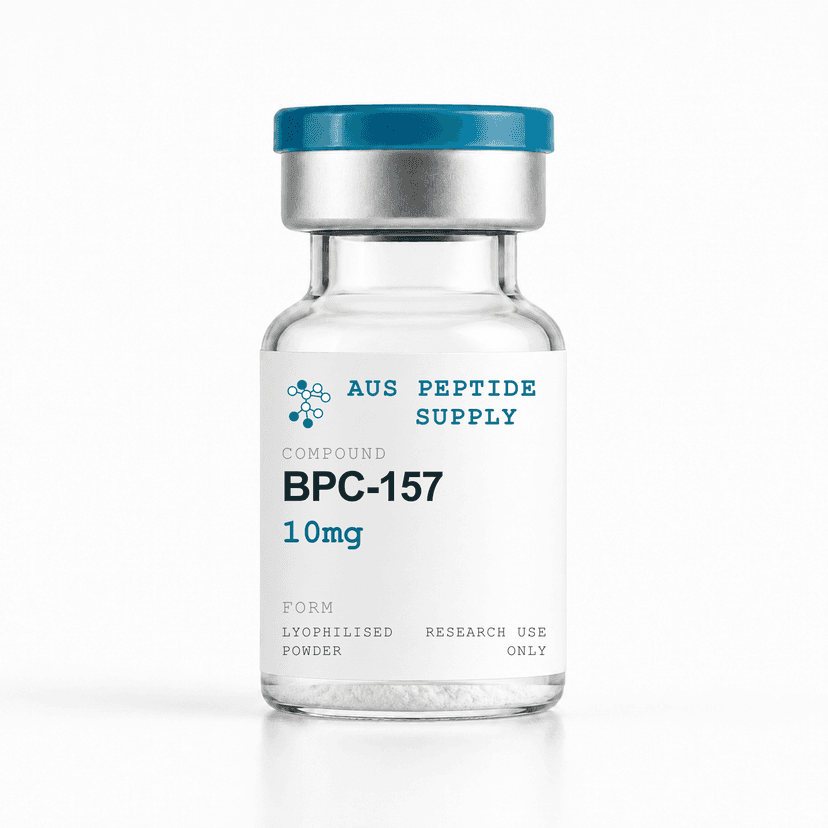
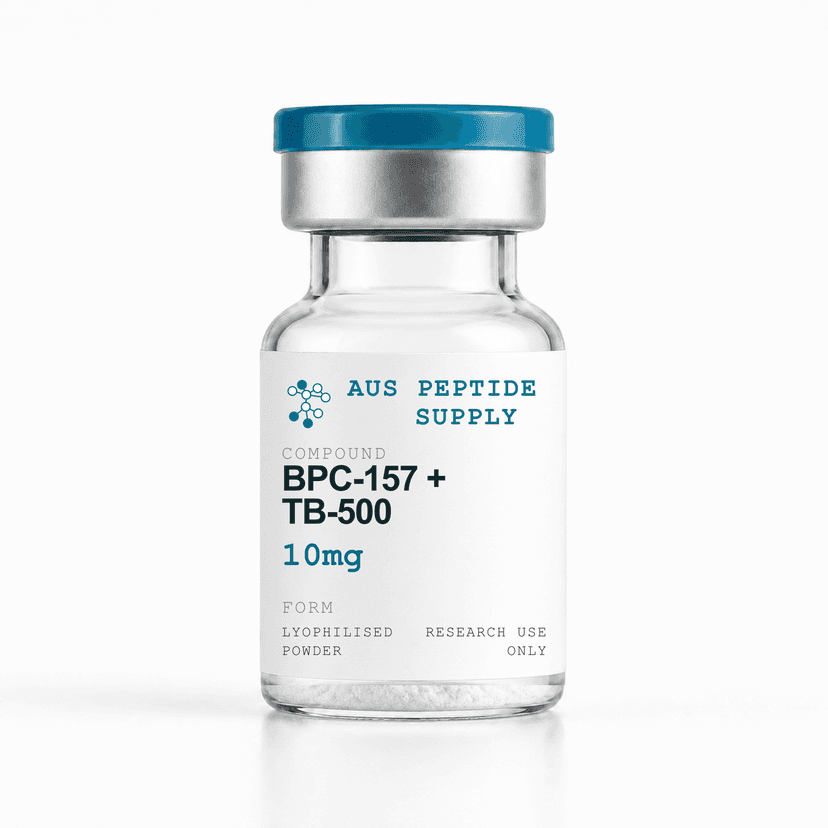
View current prices, availability and analytical-document status on each product page. These catalogue formats are for laboratory research; they are not equivalent to medicines or materials used in a cited study.
This FAQ helps readers identify what a BPC-157 source actually establishes. It covers common questions about names, experiments, product documents and Australian context. The selected sources are examples rather than a systematic review of all published research.
What is BPC-157?
BPC-157 is a 15-amino-acid peptide, also written as BPC 157 or BPC157. “Pentadecapeptide” refers to that chain length. The tendon-study record describes its relationship to body protection compound identified in gastric juice. A compound name alone does not establish a supplied sample's identity or performance.
What has BPC-157 been studied for?
One frequently cited example investigates rat-derived tendon tissue and cells. It measures outgrowth, migration and survival under stress. These are experimental endpoints, not measurements of pain relief or clinical recovery. Read the BPC-157 tendon research overview for the study's methods and limitations.
When reviewing another claimed application, ask for its own primary paper. A result from one tissue or experimental model cannot answer every question about another organ, condition or preparation.
Are there human studies of BPC-157?
Yes, small human reports exist. A 2025 intravenous safety pilot followed two adults, both of whom had previously received BPC-157. The authors reported no side effects and no measurable changes in the tested biomarkers during the short observation period.
That is a very small, uncontrolled observation. It cannot establish the frequency of uncommon harms, longer-term safety or whether a treatment works. “A human study exists” and “there is reliable evidence for routine clinical use” are different conclusions. The preparation studied also cannot be assumed equivalent to a separate catalogue product.
Is BPC-157 safe, and what about side effects?
The two-participant pilot cannot establish a general safety profile. Absence of an observed event in a small sample does not mean an event cannot occur. Safety questions require attention to the population, preparation, follow-up, measured outcomes and study design.
The TGA's June 2026 statement includes BPC-157 among unapproved peptide products and describes serious adverse effects reported across this product category. Those reports do not provide a BPC-157-specific event rate. For personal treatment questions, consult a qualified healthcare professional; laboratory catalogue material is not intended for human or veterinary use.
Is BPC-157 approved in Australia?
The same TGA statement identifies products containing BPC-157 among unapproved peptides that have not been evaluated for safety, quality or effectiveness. An online listing or “research use only” label is not evidence of TGA approval. Approval, access, importation and supply are distinct questions; check current TGA information for the relevant activity rather than treating a blog as legal permission.
Are oral BPC-157 and a research vial equivalent?
A shared compound name does not demonstrate equivalent formulations. To evaluate an oral preparation, look for evidence about that exact formulation, its composition, stability and the route used in the study. A study of a different preparation cannot establish absorption or clinical performance for a capsule, tablet or research powder.
Nor does a vial establish suitability for injection. Packaging and route-specific evidence answer different questions. The oral versus injectable formulation guide explains how to keep these distinctions in a reading record.
What does a BPC-157 certificate of analysis tell me?
Start with the tests actually named on the document. Identity, chromatographic purity and measured content address different properties. A purity percentage alone does not establish sterility, absence of endotoxin or suitability for a particular experiment.
For an example, read the BPC-157 report record alongside the HPLC explanation. Match sample identifiers and dates, then ask whether the report is traceable to the inventory lot being evaluated. An associated historical report should not be silently treated as a test of every subsequent vial.
How should BPC-157 be stored or prepared for laboratory work?
Use material-specific instructions and the laboratory's validated method. Record the sample, solvent, final volume, preparation time and storage conditions. A general blog cannot supply a validated solution shelf life for every formulation and container.
The storage record guide and laboratory reconstitution guide provide questions to document. Nominal concentration arithmetic does not select a compatible solvent or establish stability.
Is BPC-157 the same as TB-500?
No. They are distinct research materials, and a blend is a third presentation with its own component quantities. The BPC-157 versus TB-500 comparison explains the identity evidence and why a blend label does not demonstrate a superior result.
Where can I check BPC-157 research prices in Australia?
Use the BPC-157 product record for the current listed price and availability. The Australian BPC-157 price guide shows how to compare labelled quantities, shipping and documents. A procurement estimate is separate from a monthly treatment cost or dosing schedule.
Sources and further reading
- BPC-157 tendon explant and fibroblast study (2011)Chang et al. — Journal of Applied Physiology; PMID 21030672
- Two-participant intravenous BPC-157 safety pilot (2025)Lee and Burgess — Alternative Therapies in Health and Medicine; PMID 40131143
- TGA and Chief Medical Officer statement on unapproved peptidesTherapeutic Goods Administration — 19 June 2026
Continue your research
More Articles