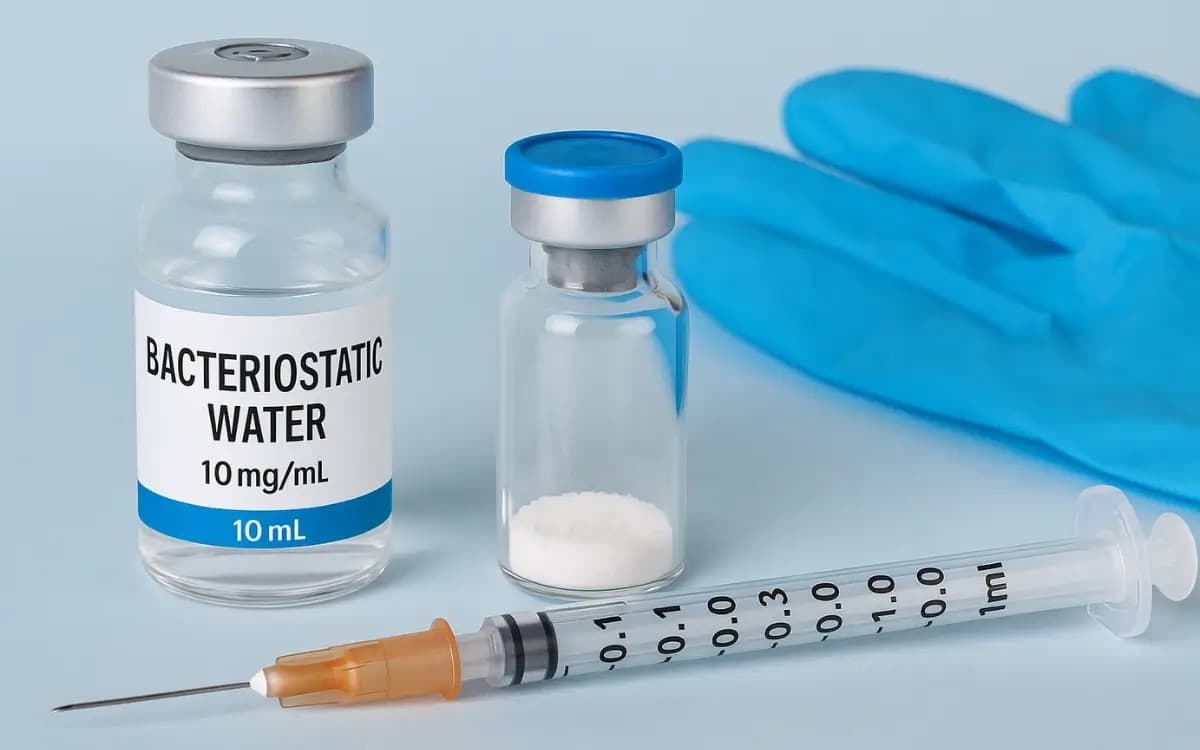
Reconstitution is part of sample preparation. To reproduce an experiment, another researcher needs more than a statement that a vial was mixed with water. They need a record of the material, the dissolution method and the prepared solution.
Start with the material and the method
Identify the sequence or exact compound form, batch, nominal quantity and available analytical evidence. Confirm the solvent and preparation conditions specified by the supplier or your validated laboratory procedure. The Invitrogen dissolution guide explains that peptide charge, hydrophobicity, downstream compatibility and stability influence solvent selection, and recommends testing a small amount when solubility is uncertain. Its instructions concern its own custom peptides; they are not a universal protocol for every catalogue item.
Record final volume, not just liquid added
For nominal mass m in milligrams and final solution volume V in millilitres, concentration is m ÷ V in mg/mL. Adding a stated volume of solvent is not always the same as establishing the final solution volume required by a quantitative method.
For example, a hypothetical 10 mg of material made to a final 2 mL gives a nominal 5 mg/mL. The word nominal matters: this calculation assumes the stated mass basis and complete dissolution. Use the laboratory concentration calculator for a worked aliquot example.
What belongs in a preparation record?
| Field | Record |
|---|---|
| Material | Name, form, supplier, batch and relevant document identifiers |
| Method | Procedure version, operator and preparation date |
| Solvent and volume | Solvent identity, lot, relevant grade and final solution volume |
| Result | Nominal concentration, appearance, deviations and any confirmatory measurement |
| Storage | Documented conditions, aliquot labels and supported retest or use period |
Do not infer stability from appearance
A clear solution is an observation, not a stability study. Record a change in colour, precipitate or unexpected appearance as a deviation for investigation. Do not invent a shelf life because a different peptide was stable in a different solvent.
Read the storage guide alongside the material-specific instructions. Keep the preparation log linked to the original batch record so later results can be traced back to the sample actually used.
Resolve missing information before applying the procedure
If a supplier gives only a general mixing instruction, request the exact material-specific conditions your method needs. The supplier worksheet includes fields for unresolved preparation and transport questions.