Research Insights 4 min readPublished
BPC-157 vs TB-500: Differences in Identity, Research and Blends
Compare the molecules, the experiments behind common claims and the information needed to distinguish a single compound from a BPC-157 and TB-500 blend.

Key answer
BPC-157 and TB-500 are different peptides. BPC-157 has 15 amino acids; analytical work identified a seven-residue acetylated thymosin beta-4 fragment in a TB-500 product. Separate laboratory studies cannot rank them for human recovery or establish that a combined vial works better.
Compare research formats
View current prices, availability and analytical-document status on each product page. These catalogue formats are for laboratory research; they are not equivalent to medicines or materials used in a cited study.
Searching for BPC-157 versus TB-500 often brings together three questions: are they the same molecule, do their studies show the same thing, and what does a blend contain? Answering those separately prevents a shared research theme from becoming an unsupported claim of equivalence.
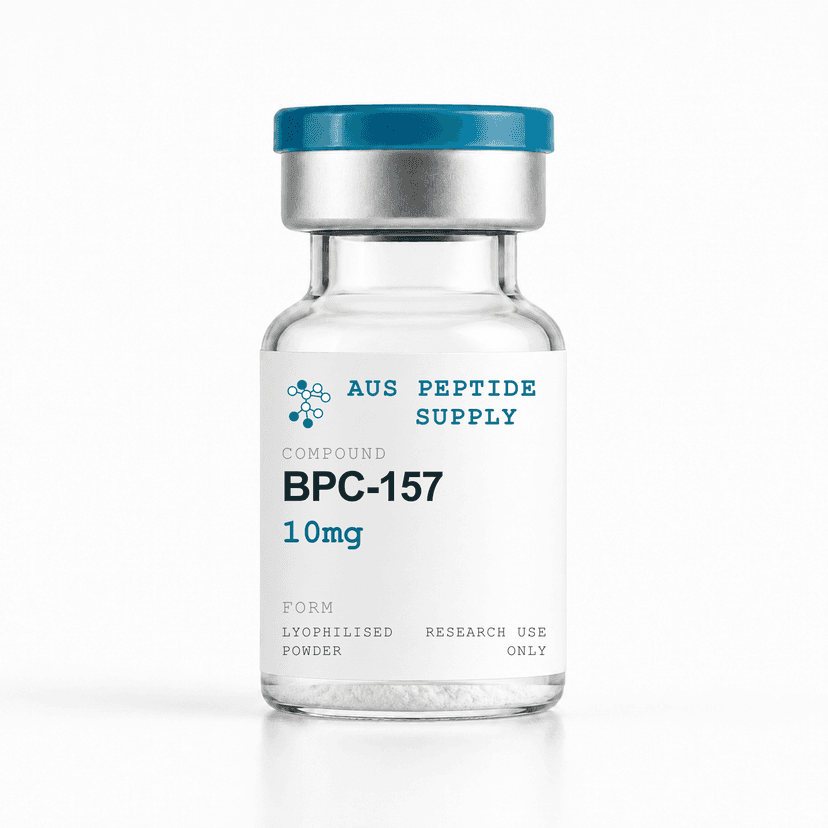
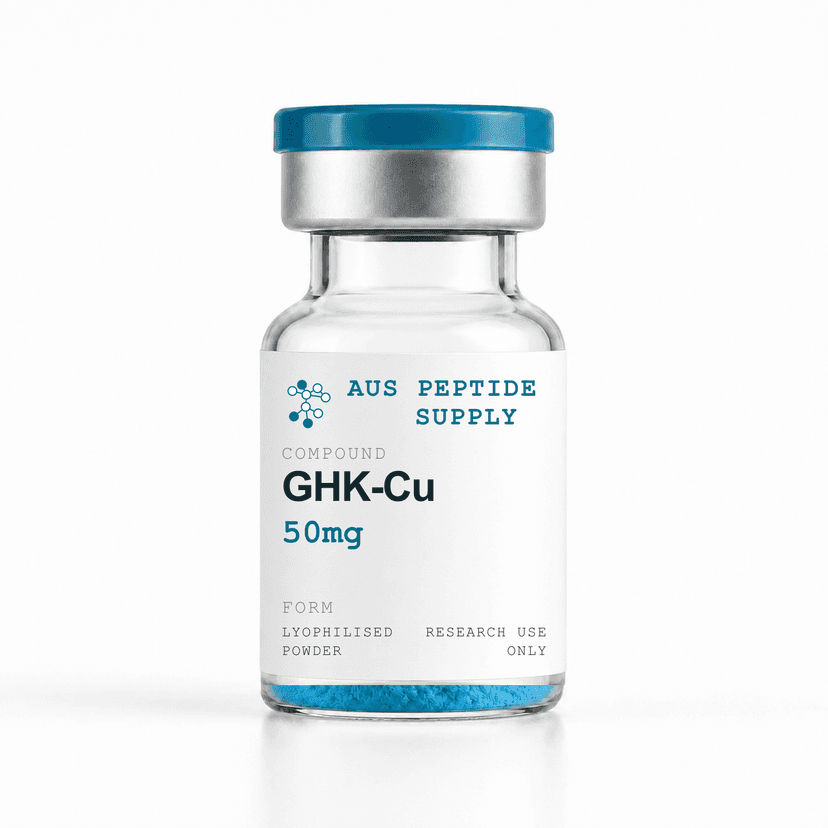
BPC-157 and TB-500 at a glance
| Comparison | BPC-157 | TB-500 |
|---|---|---|
| Peptide identity | A 15-amino-acid peptide | Ac-LKKTETQ identified in a marketed product: an acetylated seven-residue fragment |
| Selected research | Rat-derived tendon tissue and fibroblast experiments | Analytical identification, metabolism and fibroblast assays |
| Important distinction | A tissue-model observation is not a human recovery outcome | The studied fragment is not interchangeable with full-length thymosin beta-4 |
| Question for a supplied sample | Does the identity evidence match the intended BPC-157 material? | Which sequence and modification does the TB-500 label represent? |
| Combined format | A blend needs identification and quantity information for each component | |
What does the BPC-157 tendon study show?
Chang and colleagues' 2011 study examined tendon explants and fibroblasts derived from rat Achilles tendons. It reported changes in tissue outgrowth, cell movement and survival under an experimental stressor, without a direct proliferation increase in the reported assay.
Those endpoints explain the study's relevance to laboratory research. They do not measure how quickly a person returns to activity. The existing BPC-157 overview takes a closer look at that paper; this comparison uses it to identify the kind of evidence being compared.
Is TB-500 the same as thymosin beta-4?
The names should not be substituted without checking the material. Esposito and colleagues used chromatography and mass spectrometry to identify Ac-LKKTETQ in a TB-500 formulation. This is an acetylated fragment corresponding to positions 17–23 of thymosin beta-4, rather than the full-length molecule.
That identification applies to the material analysed. It does not settle the composition of every product carrying the same name. When a paper concerns thymosin beta-4, check whether it studied the full molecule, an unmodified fragment or the acetylated fragment before applying its conclusions to a TB-500-labelled sample. The TB-500 dossier collects the relevant identity records.
Why the parent peptide and its metabolites matter
A 2024 study by Rahaman and colleagues measured TB-500 and its breakdown products in laboratory systems and rats. In its fibroblast wound-healing assay, only the metabolite Ac-LKKTE showed a significant effect compared with the control.
The implication for reading is narrow but useful: keep the parent compound and measured metabolite separate. A cell-assay result for a breakdown product is not evidence that an intact commercial vial has the same effect, and an assay called “wound healing” is not itself a human wound-treatment trial.
Can the studies tell us which peptide is better?
The selected papers are not a head-to-head clinical comparison. Different experiments may use different cells, materials, controls, exposure conditions and endpoints. Comparing the adjectives in two abstracts cannot produce a reliable ranking.
For a research comparison, record the experimental question first. Then compare like endpoints within compatible models, preserve negative findings and note missing controls. If one study measures cell migration and another measures an analytical detection limit, their results answer different questions. Neither result by itself establishes a preferred human treatment.
What changes when BPC-157 and TB-500 are in a blend?
A combined label identifies a presentation; it does not demonstrate synergy. Showing that a combination performs differently would require suitable evidence for that exact mixture, ratio, model and endpoint, including comparison with the individual components. None of the selected papers establishes that for the catalogue blend.
When reading the BPC-157 + TB-500 product record, distinguish total labelled mass from the declared mass of each component. For example, a hypothetical 10mg mixture split equally would contain a nominal 5mg of each, not 10mg of each. This example explains label arithmetic and is not an assay result or a statement of the listed product's composition.
A comparison checklist for laboratory records
- Identify the intended compound or mixture, including sequence and relevant modifications.
- Match each scientific claim to its original study, model and measured endpoint.
- Request analytical identity and quantity information for each required component.
- Check whether the report sample can be traced to the supplied lot.
- Compare prices only after the material and quantity basis are clear.
Use the analytical-method reference for the measurement questions, the Australian BPC-157 price guide for cost calculations, and the research FAQ for introductory evidence questions.
Sources and further reading
- BPC-157 tendon explant and fibroblast study (2011)Chang et al. — Journal of Applied Physiology; PMID 21030672
- Identification of the acetylated thymosin fragment in TB-500 (2012)Esposito et al. — Drug Testing and Analysis; PMID 22962027
- TB-500 and metabolite measurements in laboratory systems and rats (2024)Rahaman et al. — Journal of Chromatography B; PMID 38382158
Continue your research
More Articles