Shared compound evidence record
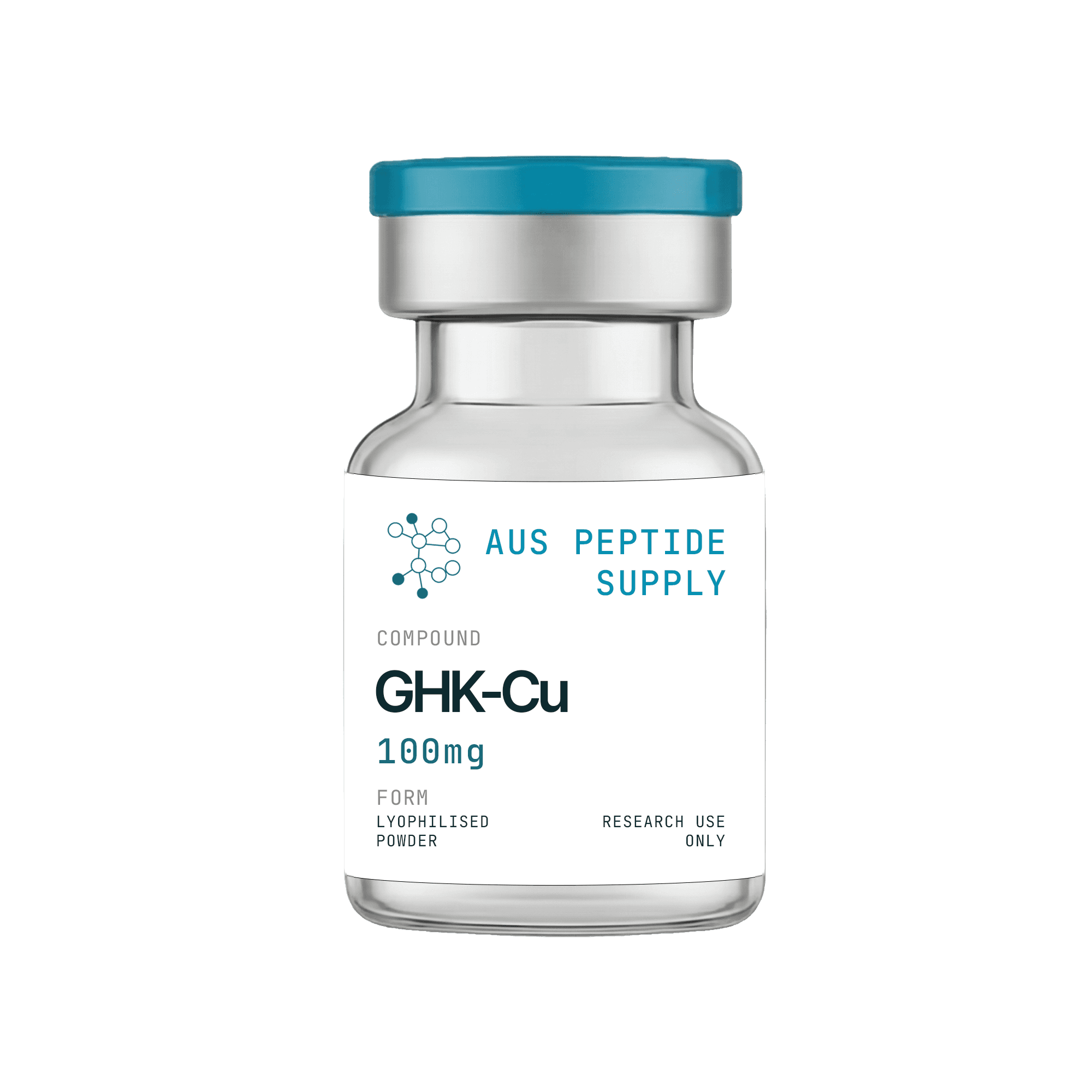
GHK-Cu (50mg)
Peptide Chemistry
Loading the shop...
In Stock
100mg Lyophilised Powder
For laboratory research only.
Early Black Friday: 20% off. Automatically applied.
Quantity
1 vial
Or choose express delivery for $15.99.
Estimate for these items only, before discount codes or payment fees. Final total in checkout.
No account needed · PayID / bank transfer
Analytical documentation
View published lab report99.814% purity reported
Catalogue-associated report; current inventory-lot match is not established. Confirm before relying on it.
Labelled quantity
100mg
Category
Peptide Chemistry
Order within the current dispatch window
Melbourne cut-off time updates live every second.
Time Remaining
12:24:41
Dispatch follows payment confirmation. Delivery options and cutoff terms
Stable research navigation
These links are based on catalogue family, evidence records, research topics and bundle composition. They do not imply therapeutic similarity.
Shared compound evidence record
Peptide Chemistry
Shared compound evidence record
Tissue-Response Research
Shared compound evidence record
Tissue-Response Research
Shared research topic
Tissue-Response Research
Research library
These resources separate compound identity, batch-quality questions and study evidence. A linked study does not establish that this catalogue material is equivalent to a medicine or investigational product.
GHK-Cu is the copper complex of the tripeptide glycyl-L-histidyl-L-lysine. Its research context includes copper-peptide chemistry and analytical characterisation.
Supplied as a lyophilised powder. The product name states the nominal quantity for this catalogue format. Review the analytical-document status and the CoA library for available sample reports. Read the identifiers, methods and measured results in the actual report; do not assume that one record covers every vial or batch.
The labelled mass describes the GHK-Cu presentation. It is not a statement of elemental copper content, solution concentration or biological activity. Use material-specific composition and analytical records for those distinctions. Consult the GHK-Cu research guide for source context and evidence limits.
Use the material-specific documentation and a validated laboratory method to select solvent, concentration and storage conditions. Keep the sample identifier and preparation record with the experimental data. A labelled mass or purity result does not establish solution stability, sterility or suitability for a particular assay.
For laboratory research only. Not for human or veterinary use.
Shared research topic
Mitochondrial Research
Shared research topic
Mitochondrial Research