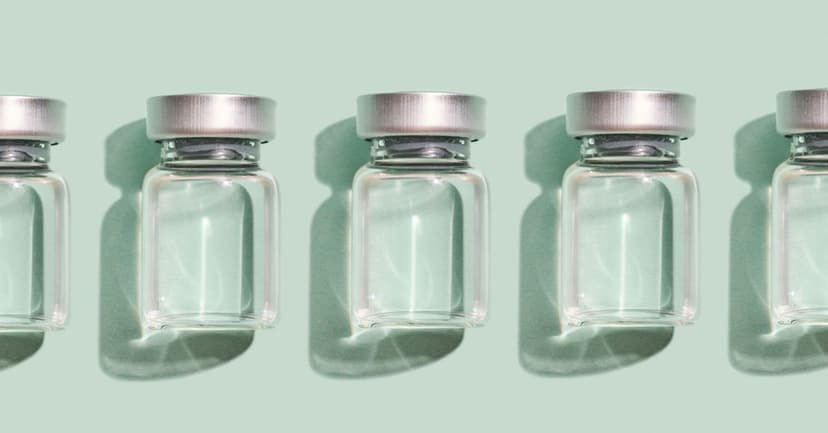
AOD-9604 illustrates a common gap in experimental medicine: a plausible mechanism and an encouraging animal result can fail to produce the intended human benefit. A useful research article needs both parts of that history. Describing only fat-metabolism experiments leaves readers with an incomplete picture of what happened when the idea reached people.
What is AOD-9604?
The FDA's 2024 chemistry assessment describes a 16-amino-acid peptide derived from residues 177–191 of human growth hormone, with an additional tyrosine at one end. This is more precise than treating every product called HGH fragment as interchangeable. It also distinguishes the free base from the acetate form.
A fragment is a smaller sequence derived from a larger molecule. It need not reproduce all of the larger molecule's actions. That was part of the research question: could a selected fragment influence fat metabolism without reproducing other growth-hormone effects? An experimental rationale is a question to test, rather than evidence that the desired separation has been achieved clinically.
What the mouse experiment found
In a 2001 study by Heffernan and colleagues, obese and lean mice were studied over 14 days. AOD-9604 was associated with reduced body-weight gain and increased fat oxidation in obese mice. Separate cell experiments did not show competition for the growth-hormone receptor or receptor-mediated cell proliferation under the tested conditions.
Fat oxidation means using fat as a fuel. Lipolysis means breaking down stored fat; they are related but distinct processes. Neither term, on its own, establishes sustained human fat loss. An organism can change fuel use without producing the clinical outcome implied by a weight-loss claim. The study supplies a mechanistic starting point and a defined animal observation.
What happened in human obesity research?
The 2024 FDA evidence review reports that a study enrolling 536 people with obesity did not find a significant weight-loss difference from placebo at its 12-week primary assessment. It also describes the developer ending the obesity programme after that failure. This is an agency assessment of the available clinical record, not a new randomised trial performed by the FDA.
| Evidence | Measured question | What remains unresolved |
|---|---|---|
| 2001 mouse and cell experiments | Weight gain, fuel use and selected receptor effects | Durable clinical benefit in people |
| Human obesity programme, assessed in 2024 | Weight change compared with placebo | The intended advantage was not established in the larger study |
| A research-vial listing | Declared identity and nominal amount | It is not an effectiveness experiment |
Why the negative result matters
A failed primary endpoint should change the conclusion, even when an earlier experiment looked promising. It does not prove that the molecule has no biological activity under any conditions. It does mean that the intended outcome was not established in the tested setting. Replacing that conclusion with testimonials or a smaller favourable subgroup changes the question after the result is known.
A subgroup observation can generate a new hypothesis. To become dependable evidence, it needs a clear rationale, appropriate statistical handling and a subsequent study designed to test it. Searching retrospectively for any group that improved is not equivalent to confirming the original claim.
What would a useful next study report?
For a human effectiveness question, readers would want the population, randomisation, comparator, planned endpoint, missing-data handling and adverse events. For an analytical question, they would want the exact sequence and form, batch traceability and an assay suitable for the sample. These are different projects. Improving documentation for a vial cannot repair a failed clinical endpoint, and a clinical trial cannot certify an unrelated batch.
| Reported item | What it does not establish |
|---|---|
| Fat oxidation in mice | Human weight-loss effectiveness |
| No effect in a receptor assay | Absence of all possible adverse effects |
| Short-term tolerability | Long-term safety or safety of another formulation |
| High chromatographic purity | Clinical effectiveness, sterility or a complete impurity assessment |
Frequently asked questions
Is AOD-9604 the same as growth hormone?
No. It is a modified fragment, and the experiments above specifically investigated whether its behaviour differed from the full hormone.
Does the human evidence establish fat loss?
The selected regulatory assessment does not support that conclusion. Its account of the larger placebo-controlled study is negative for the intended primary weight-loss comparison.
What does the 5 mg format mean?
It identifies nominal catalogue quantity for laboratory work. It is not a human dose or a claim that the supplied material matches a clinical formulation. The article deliberately provides evidence interpretation without a personal administration schedule.